

-
Research Article
-
Analysis of workload and energy consumption characteristics of an electric tractor based on measured agricultural operation data
실측 농작업 데이터 기반 전기 트랙터 작업 부하 및 에너지 소비 특성 분석
-
Min-Jong Park, Hyeon-Ho Jeon, Seung-Min Baek, Seung-Yun Baek, MD ABU AYUB SIDDIQUE, Jong-Dae Park, Cheol-Woo Yang, Min-Jae Park, Yong-Joo Kim
박민종, 전현호, 백승민, 백승윤, SIDDIQUE MD ABU AYUB, 박종대, 양철우, 박민재, 김용주
- This study analyzed the energy consumption and available operating time of a 55 kW electric tractor using measured plow tillage data. The …
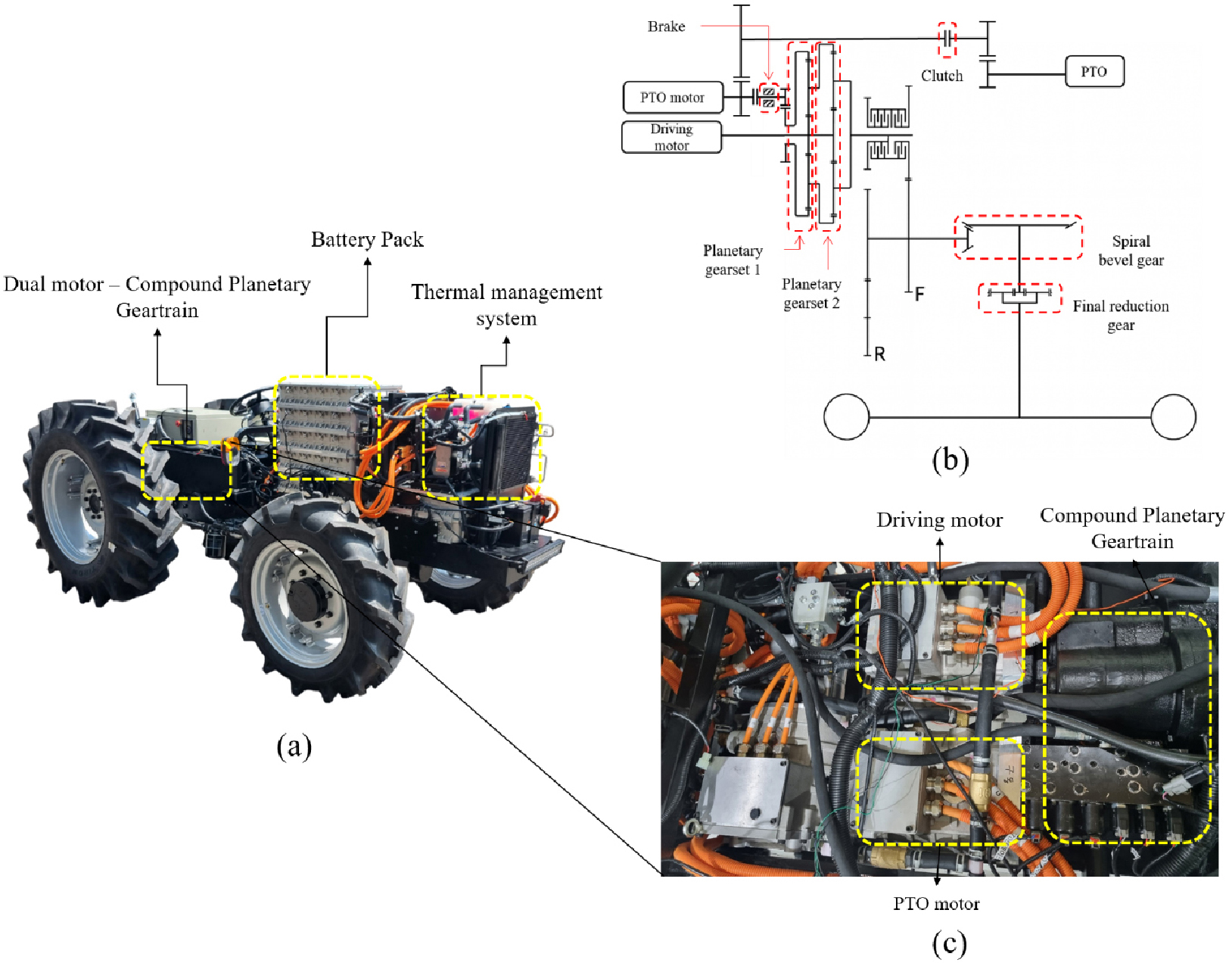
- This study analyzed the energy consumption and available operating time of a 55 kW electric tractor using measured plow tillage data. The electric tractor used in this study was equipped with a dual-motor powertrain composed of a driving motor, PTO motor, inverters, battery pack and compound planetary geartrain. During plow tillage, the driving motor and PTO motor powers were coupled through the compound planetary gearset and transmitted to the axle. Field experiments were conducted under actual plow tillage conditions, and motor torque, motor rotational speed and battery state of charge (SoC) were measured. The battery energy consumption was calculated by using the battery capacity and SoC decrease. The battery energy consumption was calculated as 2.486 kWh, corresponding to an average battery power consumption of 12.26 kW. Based on the measured plow tillage data, the energy consumption for 30 minute operation was estimated as 6.13 kWh. Based on the battery capacity of 83.14 kWh, the available operating time was estimated to be 6.78 h when the full battery capacity was used. These results indicate that the measured plow tillage data can be used to estimate the energy consumption and operating time of electric tractors under actual field working conditions. - COLLAPSE
-
Analysis of workload and energy consumption characteristics of an electric tractor based on measured agricultural operation data
-
Research Article
-
Analysis of under-hood thermal flow characteristics of a hydrogen fuel cell tractor using CFD
CFD 해석을 이용한 수소연료전지 트랙터의 후드 내부 열유동 특성 분석
-
Cheol-Woo Yang, Min-Jae Park, Min-Jong Park, Jong-Dae Park, Min-Ha Lee, Won-Jin Kim, Hyeon-Ho Jeon, Yong-Joo Kim
양철우, 박민재, 박민종, 박종대, 이민하, 김원진, 전현호, 김용주
- This study investigated the airflow distribution and thermal management performance inside the hood of a hydrogen fuel cell tractor using CFD (computational …
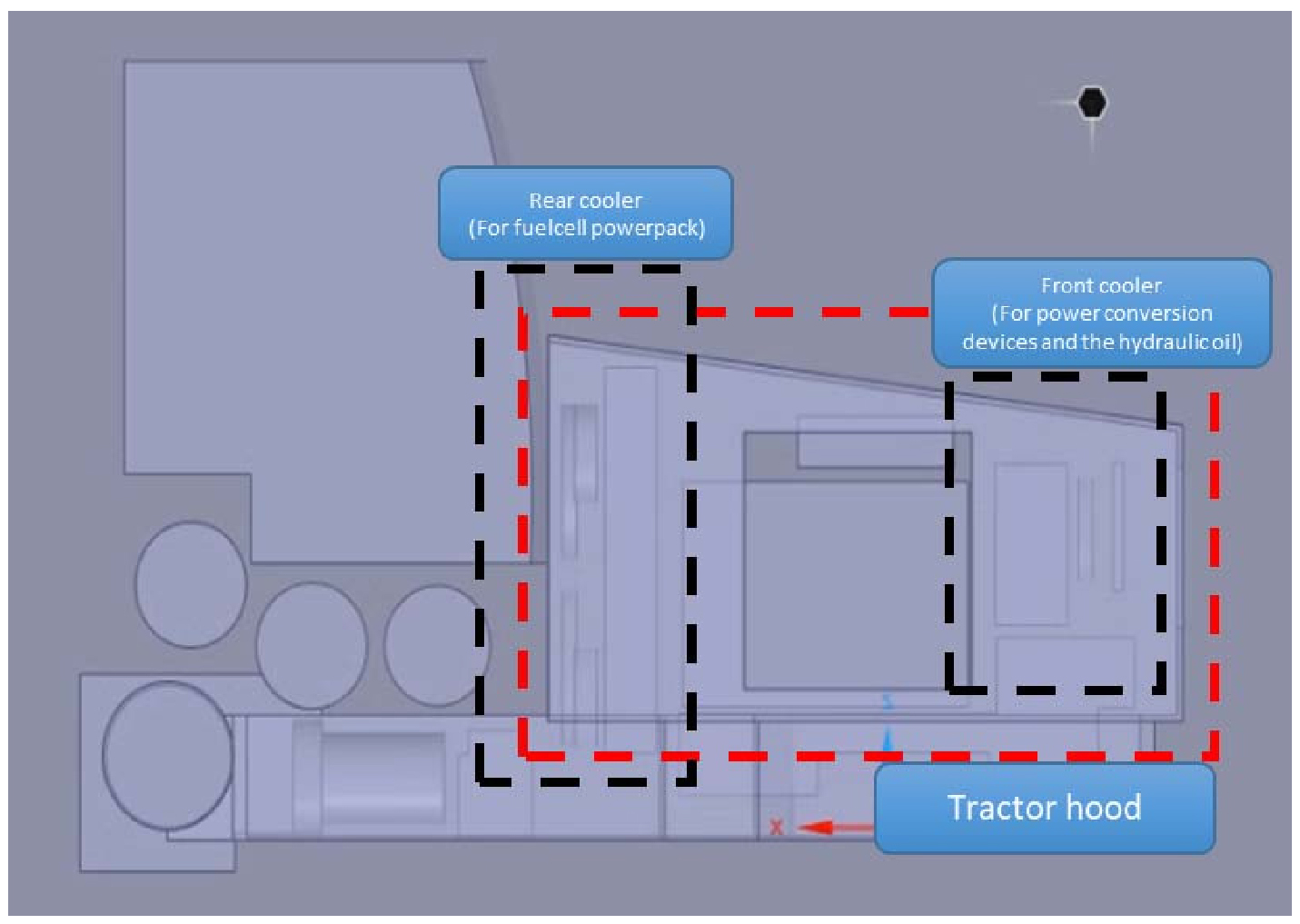
- This study investigated the airflow distribution and thermal management performance inside the hood of a hydrogen fuel cell tractor using CFD (computational fluid dynamics) analysis. The cooling system consisted of a front cooler for power conversion devices and hydraulic oil cooling, and a rear cooler for cooling the fuel cell stack and power-pack electrical components. The required airflow rate and opening area were calculated based on the heat rejection rate, target air temperature rise, air density, and specific heat. CFD analysis was conducted under a high ambient temperature condition of 45℃, and the temperature and airflow characteristics inside the hood were evaluated. The maximum temperature was approximately 85℃ and was mainly concentrated near the front cooling module and radiator. The high-temperature region was localized around the cooling module, while no significant hot-air recirculation toward the side air inlets was observed. The maximum airflow velocity was approximately 16.5 m/s, and the airflow was smoothly discharged through the front outlet and the rear hood–cabin gap without noticeable stagnation or reverse flow. These results indicate that the proposed side-inlet and front/rear separated exhaust configuration can effectively reduce heat accumulation inside the hood and improve the thermal management performance of a hydrogen fuel cell tractor. - COLLAPSE
-
Analysis of under-hood thermal flow characteristics of a hydrogen fuel cell tractor using CFD
-
Research Article
-
Analysis of differences in the perceived importance of sustainable agriculture evaluation factors according to smart agriculture expert types
스마트농업 전문가 유형에 따른 지속가능농업 평가요인의 중요도 인식 차이 분석
-
San-ho Kim, Min-sun Kim, Gun-il Bae, Jong-hwan Lee
김산호, 김민선, 배건일, 이종환
- Purpose: This study analyzed differences in the perceived importance of sustainable agriculture evaluation factors according to the occupational positions and fields of …
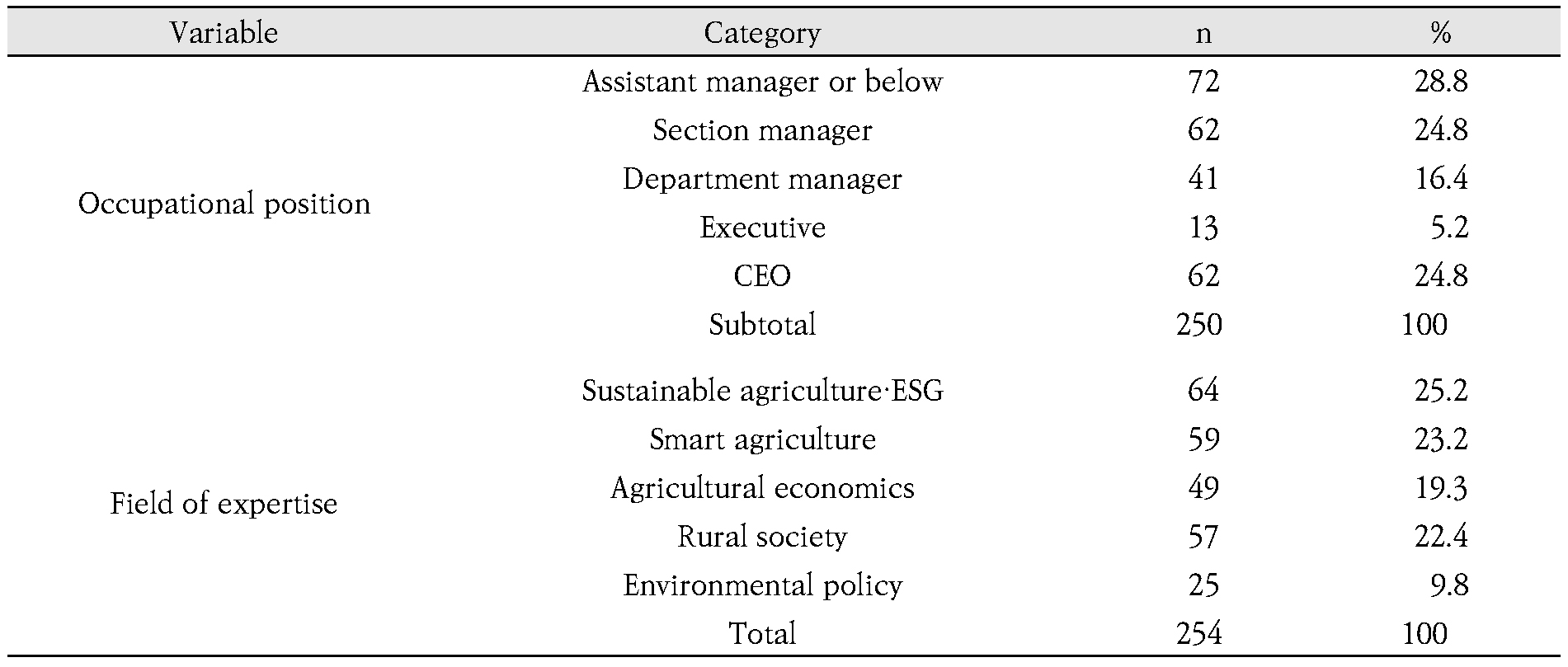
- Purpose: This study analyzed differences in the perceived importance of sustainable agriculture evaluation factors according to the occupational positions and fields of expertise of smart agriculture experts, to support the development of an integrated evaluation framework. Methods: Survey data were collected from 254 experts and agricultural stakeholders. The evaluation framework comprised six upper-level factors and 24 sub-indicators. Respondents were classified by occupational position and field of expertise. Group differences were examined using one-way analysis of variance (ANOVA), followed by Tukey’s honestly significant difference (HSD) test. Effect sizes were assessed using eta squared (η²). Results: Occupational position had little influence on the perceived importance of the upper-level factors, with a significant difference observed only for governance factors (p<0.05). In contrast, field of expertise significantly affected five of the six upper-level factors (p<0.001). Environmental sustainability showed the largest effect size (η²=0.209), followed by governance (η²=0.171), social sustainability (η²=0.154), and technological sustainability (η²=0.141). Among the 24 sub-indicators, 20 showed significant differences by field of expertise. Carbon emission reduction (η²=0.168), pesticide use reduction (η²=0.155), and agricultural data platform establishment (η²=0.141) exhibited the largest effect sizes. Conclusions: Perceived importance differed more by field of expertise than by occupational position. These findings support multidisciplinary approaches to sustainable agriculture evaluation. - COLLAPSE
-
Analysis of differences in the perceived importance of sustainable agriculture evaluation factors according to smart agriculture expert types
-
Research Article
-
Equivalent load characteristics of the driving unit of a self-propelled garlic and onion collector based on field load measurements
실작업 조건 계측 기반 자주식 마늘·양파 수집기 주행부의 등가부하 특성 분석
-
Yi-Seo Min, Seung-Gwi Kwon, Sang-Hee Lee, Seok-Pyo Moon, Wan-Soo Kim
민이서, 권승귀, 이상희, 문석표, 김완수
- This study analyzed the equivalent load of the driving unit of a self-propelled garlic and onion collector to quantify the effect of …
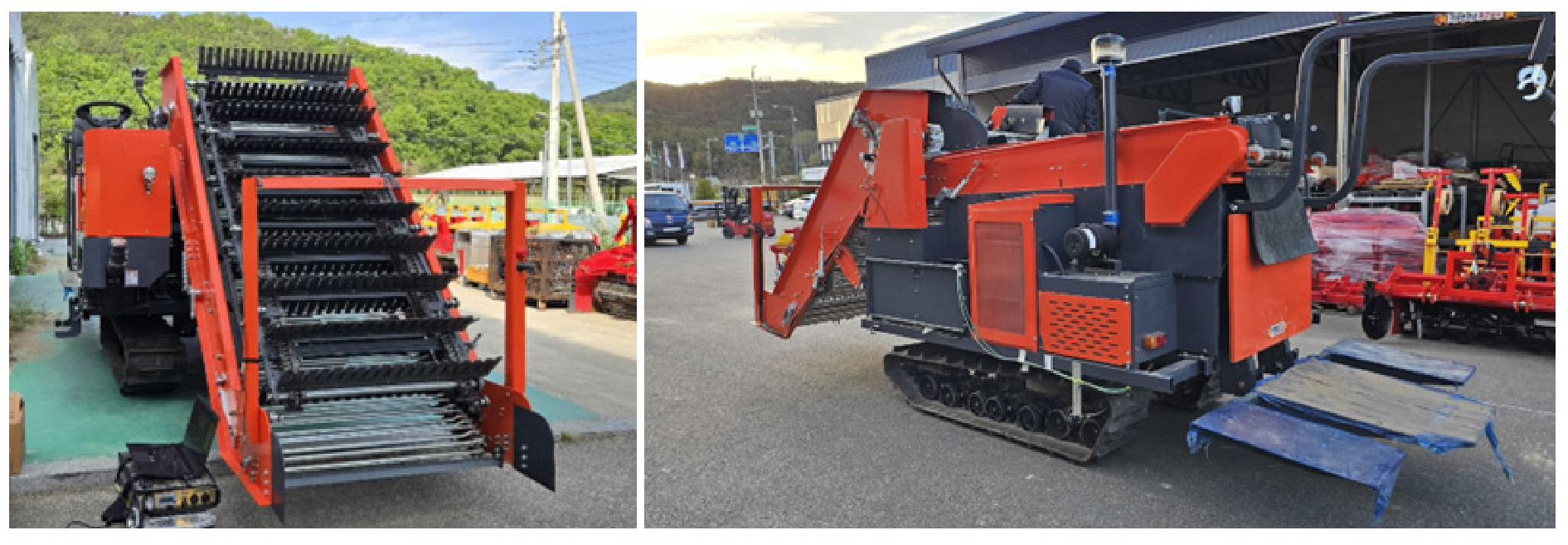
- This study analyzed the equivalent load of the driving unit of a self-propelled garlic and onion collector to quantify the effect of load variability on fatigue design of the driveline. Field experiments were conducted under 18 operating conditions combining two crops (garlic and onion), three engine speeds (2000, 2300, and 2600 rpm), and three travel speeds (0.1, 0.2, and 0.3 m/s). Left and right sprocket torques were measured using strain gauge–based telemetry, and the 1× and 2× rotational harmonic errors caused by the single-sided gauge placement were removed in the frequency domain while preserving the actual work-load components. Equivalent torque and equivalent rotational speed were calculated based on Miner’s rule with eight load bins and a fatigue damage exponent of 3 (ISO 6336-6). The ratio of equivalent to mean torque exceeded unity under all conditions (1.015–1.123 for the left and 1.005–1.050 for the right sprocket) and remained stable across crops and operating conditions, whereas the mean torque itself varied more strongly with the operating condition. Although the equivalent torque exceeded the mean by at most 12.3%, mean-based design overestimated fatigue life by up to 29.4% owing to the cubic dependence of fatigue damage on load. These results indicate that the load variability of the driveline can be represented by a stable side-specific correction factor, while determining a single representative design load requires additional duty-cycle information on operating conditions. - COLLAPSE
-
Equivalent load characteristics of the driving unit of a self-propelled garlic and onion collector based on field load measurements

Journal Informaiton
 Journal of Agricultural Machinery Engineering
Journal of Agricultural Machinery Engineering








 The Korean Society for Agricultural Machinery
한국농업기계학회
Department of Agricultural Engineering, National Institute of Agricultural Sciences, RDA, 310 Nongsaengmyeong-ro, Wansan-gu, Jeonju-si, Jeollabuk-do 54875, Republic of Korea
Tel: 063-224-2392 / Fax: 0303-3440-2392 / E-mail: ksam2392@hanmail.net Copyright© The Korean Society for Agricultural Machinery. Powered by APUB
Tel: 063-224-2392 / Fax: 0303-3440-2392 / E-mail: ksam2392@hanmail.net Copyright© The Korean Society for Agricultural Machinery. Powered by APUB